
Floe: Local Singles Dating
Creatix Technology LimitedSocial
4.5747.00 Reviews
- Version
- 1.0.6
- Installs
- 500.00K
- Age Rating
- Mature 17+
Screenshots
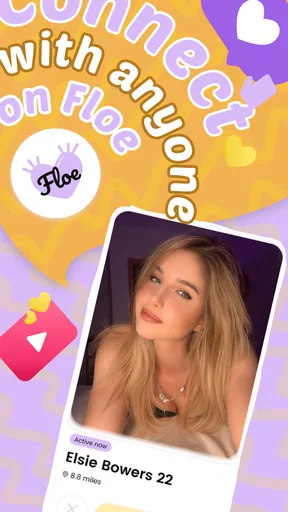


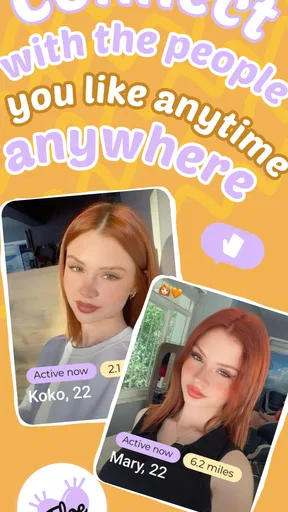

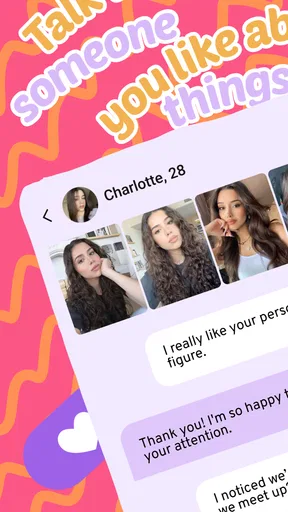

Our Review of Floe: Local Singles Dating
 Analysis by Appyee
I tried Floe: Local Singles Dating as a social app built around meeting nearby people, and my first impression was that its appeal depends heavily on the quality of the local dating pool. The basic idea is easy to understand: browse potential matches, start conversations, and decide whether someone is worth getting to know. That simplicity makes it approachable, but it also means the experience changes from one place to another more than it would with a content-focused social network.
Floe is free to download, with optional in-app purchases ranging from $4.99 to $79.99 per item. It is aimed at mature users aged 17 and over, which is important because this is not a casual messaging app for everyone. Creatix Technology Limited is the developer, and the app has already reached over 500 thousand installs with a 4.5 average from around 37 thousand ratings. Those figures suggest that it has attracted a meaningful audience, although a large overall audience does not automatically mean a busy pool of suitable singles in your neighborhood.
How Floe feels when your connection is doing the work
The strongest moments come when the app can quickly present people who are genuinely relevant to your situation. A nearby dating service has a practical advantage over a broad social platform: location is part of the reason for using it. If I am interested in meeting someone in the same area, a local focus can feel more useful than scrolling through profiles with no realistic chance of meeting.
That benefit is also tied to connectivity. Browsing, reacting, and chatting are all activities that rely on a steady connection, so Floe feels best when I am on dependable mobile data or Wi-Fi. In a strong network environment, the interaction can stay quick and lightweight. I can move from looking at a profile to deciding whether to begin a conversation without the app becoming the main obstacle.
A realistic use case is an evening commute. I might have a few minutes before a train arrives, open Floe, review a small number of nearby profiles, and save the most promising conversations for later. That is more practical than treating the app like a long session. Dating apps can become tiring when every swipe starts to feel like a decision, so short visits help me keep the process intentional rather than mechanical.
The local angle is most useful for people who are open to meeting someone relatively close by and willing to start with online conversation. It is less compelling for someone who wants a huge international pool, highly specialized communities, or a platform centered on long-form profiles. Floe’s straightforward social-dating approach is easier to enter, but it may not provide the depth that people expect from services designed around detailed compatibility systems.
What the nearby focus changes
Location can make a match feel more actionable, but it can also narrow the experience. In a densely populated area, I would expect more variety in the people appearing during regular use. In a smaller town, the same local emphasis may make the available selection feel limited. That is not necessarily a flaw in the app itself; it is a trade-off built into the idea of nearby dating.
I also found that a local match should not be treated as an automatic plan. Someone can live nearby and still have a completely different schedule, communication style, or expectation about dating. The sensible workflow is to use proximity as an initial filter, then pay attention to the quality of the conversation. A short, specific opening message is more useful than sending the same greeting to everyone.
One practical tip is to avoid judging Floe after a single brief visit. A local dating pool can look different depending on the time of day and how often people are active. I would use it in short sessions over several days, noting whether conversations become more relevant or whether I keep seeing the same limited selection. That gives a better sense of whether the app suits my area than an intense burst of swiping.
Using Floe in ordinary mobile situations
Floe fits the phone-first habits of dating apps. I can check it while taking a break, reply to a message after work, or browse when I have a quiet moment at home. The advantage is convenience: I do not need to set aside a formal appointment just to see whether there is a new conversation worth continuing.
That convenience has a downside. A phone encourages quick reactions, and profiles can become easy to judge too quickly. I would rather slow down before deciding that someone is not interesting, especially when the app is being used in a noisy place or during a rushed commute. A small screen and limited attention are not ideal for making thoughtful decisions about people.
For me, the best mobile routine is to separate discovery from conversation. I can browse when I have only a few minutes, but I prefer replying when I am somewhere quiet enough to write a real message. This avoids the common problem of matching with someone and then sending a vague response simply because I am distracted. The app is more enjoyable when I treat it as a tool for starting connections rather than a feed to consume endlessly.
Notifications and replies also create a social pressure that is easy to underestimate. Even when a service is free, attention is the real cost. I would not keep Floe open throughout the day waiting for every new interaction. A more balanced approach is to check at chosen times and decide whether a conversation deserves more time. That is especially useful for people who find repeated swiping stressful or who want dating to remain separate from work and family routines.
Who is likely to get the most from it
Floe makes the most sense for an adult who wants a simple way to discover local singles and is comfortable beginning with online chat. It may also suit someone new to dating apps who does not want to learn a complicated system before sending a first message. The core path is familiar enough that I could understand the purpose quickly.
It is less suitable for a person who wants a highly structured matchmaking experience, extensive identity verification tools, or a community built around a narrow interest. It is also not the best choice for someone who dislikes location-based discovery or prefers to meet people through existing social circles. The app’s local emphasis is its defining reason to try it, but that same emphasis makes it a poor fit when nearby options are sparse or when distance is not an important factor.
Privacy-minded users should also think carefully about the kind of information they share in conversation. I would avoid giving a new contact my exact home address, workplace details, daily routine, or other information that makes me easy to locate. Moving from chat to a first meeting should be gradual, and a public place is the sensible choice. Floe can help begin a conversation, but it cannot replace personal judgment.
What happens when the connection fails
Because Floe is built around browsing and chatting, a weak connection can interrupt the most important parts of the experience. Profiles may take longer to appear, a swipe may feel uncertain, or a message may not seem to send immediately. The frustrating part is not always knowing whether the action worked, which can lead to repeated taps or accidental duplicate attempts.
My advice is simple: when something appears stuck, pause before trying the same action several times. Check whether the connection has returned, then reopen the relevant screen and confirm what happened. This is particularly important in a chat, where repeated sending can make a conversation look careless. A short wait is usually better than assuming the app ignored the first attempt.
Using Floe in places with unstable service also changes how I would plan my time. I would browse and write messages when connected reliably, rather than composing something important while moving through an area with inconsistent coverage. If I am heading out to meet someone, I would make sure I already know the agreed location and time instead of depending on a last-minute chat exchange.
The recovery experience matters because dating conversations are sensitive to timing. A delayed message can be misunderstood, particularly early on when neither person knows the other’s communication habits. If a message seems to have disappeared, I would avoid immediately blaming the other person or sending an emotional follow-up. Rechecking later and keeping the next message calm prevents a technical interruption from becoming a social problem.
Keeping conversations manageable
A useful workflow is to keep only a few active conversations at once. When the local pool is busy, it can be tempting to start many chats and then lose track of who said what. That weakens the main advantage of a nearby dating app, because local relevance matters less if every exchange becomes generic.
I would also move slowly from matching to planning. First, look for consistent communication and basic respect. Then discuss a public meeting without sharing unnecessary personal details. If someone pressures me to move faster, requests money, or avoids ordinary questions, I would end the conversation rather than treating the match as something I have to rescue.
This is one area where Floe is no substitute for judgment. A polished profile and a nearby location do not establish trust. The app can make discovery easier, but the quality and safety of the next step still depend on how carefully I communicate.
Using the app without wasting mobile data or money
Floe is free to start, which lowers the barrier to trying it. The optional purchases are a more serious consideration because the listed range extends from $4.99 to $79.99 per item. I would use the free experience first and decide whether the app is actually useful in my area before paying for anything. A purchase cannot create compatible conversations if the local pool is not a good match for me.
The same cautious approach applies to mobile data. Browsing profiles and exchanging messages can become a background habit, especially when I open the app repeatedly out of boredom. I would use Wi-Fi when convenient, avoid leaving the app open unnecessarily, and keep conversations focused. This is not only about saving data; it also helps prevent the app from taking over my attention.
There is a subtle trade-off between speed and selectiveness. Rapid browsing may expose me to more profiles, but it can also lead to shallow decisions and more abandoned conversations. A slower routine gives each profile a fairer look and reduces the need to maintain too many chats. In my experience, that makes the free version more useful because I am measuring quality rather than trying to maximize activity.
Before buying an optional item, I would ask myself three questions: am I seeing people I would realistically meet, am I having conversations that feel reciprocal, and do I understand what the purchase is meant to improve? If the answer is no, continuing with the free version is the better choice. The price range makes it especially important not to purchase out of frustration or impatience.
Privacy-conscious habits on a dating app
Data-conscious use is not only about internet consumption. It also means being deliberate about the personal details placed into a profile or chat. I would keep early messages friendly but general, avoid posting information that identifies my home or routine, and wait until trust has developed before sharing anything more personal.
I would also treat every conversation as a separate decision. A match who lives nearby does not need to know where I will be at every hour, and a person who asks for private information immediately is giving me useful information about their boundaries. The safest approach is to keep the first stage inside ordinary conversation and make any meeting plan specific without revealing unnecessary details.
For anyone under pressure from another user, the right response is not to negotiate endlessly. End the exchange, use the app’s available controls where appropriate, and protect your own comfort. Floe is a mature social app, but mature content labeling does not mean every interaction will be mature in tone. Personal boundaries remain essential.
My verdict on Floe’s connected dating experience
After using Floe as a local dating app, I see its main strength in its clear purpose. It is designed for people who want to discover nearby singles, browse potential matches, and begin conversations without a complicated learning curve. The free entry point makes it easy to test, while the positive 4.5 average from roughly 37 thousand ratings indicates that many users have found the overall experience appealing.
The limitations are just as important. The quality of the experience depends on the local user pool, a reliable connection, and the user’s willingness to manage conversations carefully. Someone looking for a large global community or a deeply structured compatibility system may prefer a more specialized alternative. Someone who wants to avoid location-based dating altogether should skip Floe rather than expecting it to behave like a general social network.
The app is currently at version 1.0.6 and supports Android 7.0 or later, so compatibility is broad for users on older Android devices. That makes it accessible to more phone owners, but I would still judge it by how well it works in my own area rather than by reach alone. Over 500 thousand installs show that it has visibility, not that every neighborhood will offer the same selection.
My recommendation is to try Floe with a clear limit: use it for several short sessions, start only a few genuine conversations, and do not pay until the local experience proves worthwhile. Keep your personal information guarded, plan meetings carefully, and do not confuse a nearby match with an automatically good match. Floe is most convincing when connectivity helps you turn local discovery into a real conversation, not when it becomes another app to check constantly.
Verdict
Strengths of Floe: Local Singles Dating
- Focused on discovering nearby singles for more relevant matches.
- Simple interface makes browsing profiles quick and easy.
- Useful filters help narrow matches by preferences and location.
- Chat features support getting to know matches within the app.
- Profile-based matching can make conversations feel more personal.
Limitations of Floe: Local Singles Dating
- The local user pool may be limited outside major cities.
- Some useful features may require a paid subscription.
- Match quality depends heavily on how complete profiles are.
- Location-based dating can raise privacy concerns for some users.
- Inactive or incomplete profiles may still appear in discovery.
Similar Picks in This Category
View All
Meta Platforms, Inc.4.6

Instagram4.0

Likee-Live, Chat & Party Games
Likeme Pte. Ltd.4.4

Facebook Lite
Meta Platforms, Inc.4.5

TikTok - Videos, Shop & LIVE
TikTok Pte. Ltd.4.0

Moj: Free Short Drama & Reels
ShareChat4.1
Frequently Asked Questions
What is Floe: Local Singles Dating, and how does it work?
Floe: Local Singles Dating is a dating app designed to help users discover and connect with single people nearby. After creating a profile, you can add photos, write about your interests, and browse suggested profiles. Depending on the available features, you may be able to like, match, and chat with people who are also interested in meeting someone locally.
Is Floe: Local Singles Dating free to download and use?
The app can generally be downloaded without an upfront charge, but some features may require in-app purchases or a subscription. Basic profile creation and browsing may be available for free, while options such as enhanced visibility, unlimited interactions, advanced filters, or seeing additional profile information could be restricted. Check the current App Store or Google Play listing for exact pricing.
How can I protect my privacy and safety while using Floe?
As with any dating platform, avoid sharing sensitive information such as your home address, financial details, passwords, or workplace location too early. Review your profile carefully before publishing it, use the app’s blocking and reporting tools when necessary, and communicate through the platform until you feel comfortable. For a first meeting, choose a public place and tell someone you trust where you are going.
Does Floe require location access, and can I control who sees my profile?
Because Floe focuses on local dating, location information may be used to show profiles or potential matches in your area. You can usually manage location permissions through your phone’s privacy settings, although limiting access may reduce the app’s ability to provide nearby recommendations. Before joining, review the app’s privacy policy and available discovery settings to understand how your information is displayed.
What should I do if I encounter a fake profile, inappropriate message, or technical problem?
If a user behaves suspiciously, sends offensive content, requests money, or appears to be impersonating someone else, stop communicating and use the in-app block and report options. Do not send payments or personal documents to another user. For crashes, login problems, or subscription issues, update the app, restart your device, and contact Floe’s official support team through the app or its store listing.
